
College Graduates Are Booing AI. Maybe They Have a Point.
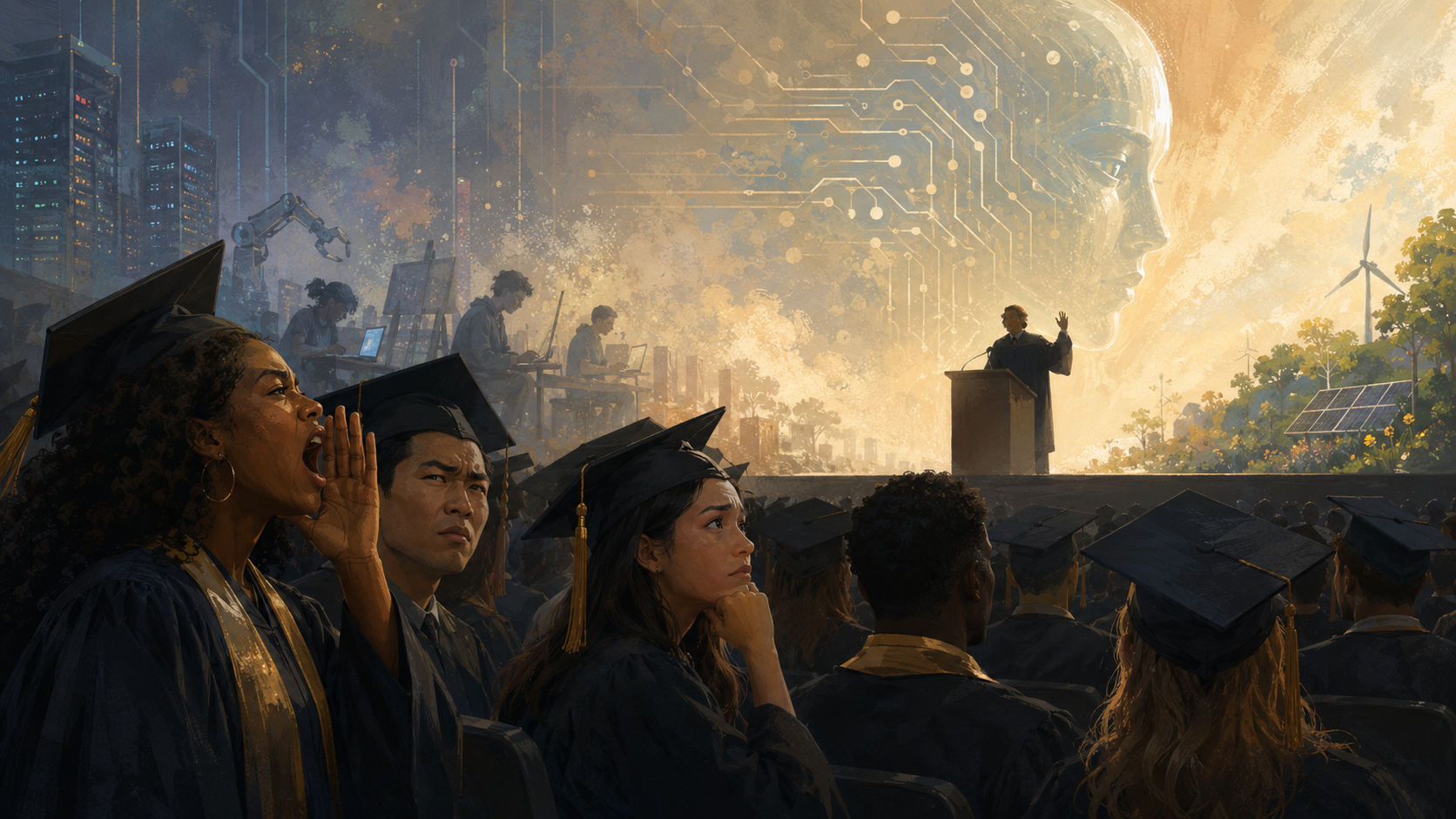
Over the past few weeks, several commencement speeches have gone viral for an unexpected reason: students booing when speakers praised the AI-powered workforce they were about to enter.
One of the clearest examples came at the University of Arizona, where former Google CEO Eric Schmidt was booed after discussing artificial intelligence and comparing its rise to previous technological revolutions. Similar backlash happened at the University of Central Florida when commencement speaker Gloria Caulfield described AI as “the next Industrial Revolution.”
As someone with a technology background who has seen first-hand the productivity gains of AI, my initial reaction was irritation.
Really? These students are graduating into one of the most powerful technological shifts of our lifetime, and their response is to boo it?
Part of me wanted to dismiss them as entitled or naïve. Technological progress is not waiting for anyone. Rejecting these tools can feel like a refusal to engage with reality, or worse, a refusal to develop the very skills that might help them thrive in a changing world.
But after sitting with that reaction for a while, my irritation started to soften into sympathy.
These students were sold a familiar promise: work hard, get the degree, launch the career. Now, just as they are entering the job market, they are being told that the first rung of the professional ladder may be automated, compressed, or fundamentally changed.
And the message from many business and technology leaders has not exactly been comforting.
Too often, AI is presented to young people as an inevitability they must accept, rather than a future they get to shape. The tone is: adapt or be left behind, but no clear path forward is proposed.
Young People Have Been Right Before
Young people are often dismissed as emotional, idealistic, or impatient, but in moments of moral crisis, those traits can be strengths.
College students were central to the civil rights movement, from the Greensboro sit-ins to the Freedom Rides. They were often called disruptive at the time, but history remembers them differently.
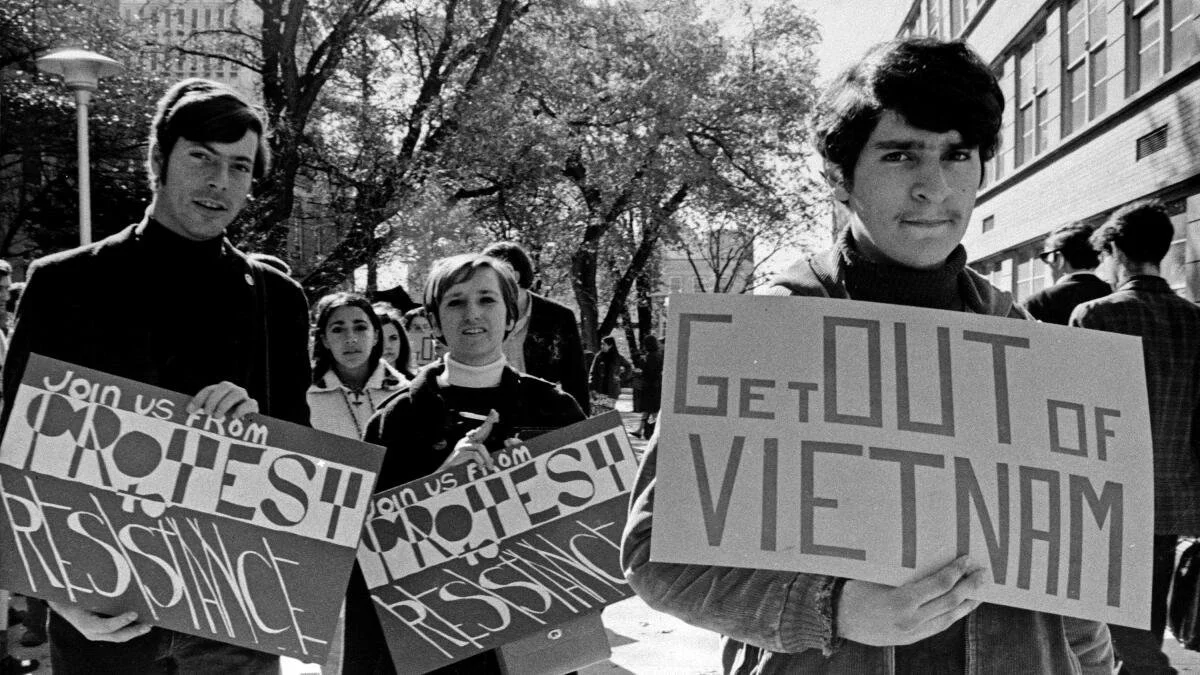
Young people helped drive opposition to the Vietnam War, long before many institutions were willing to admit the scale of the tragedy.
Press enter or click to view image in full size
More recently, young people have been among the loudest voices demanding action on climate change. They have been mocked as alarmist, but their core argument has been painfully simple: adults are making decisions today that young people will have to live with tomorrow.
That does not mean young people are always right. Youth movements can be simplistic or miss tradeoffs, but young people notice contradictions that older institutions have learned to tolerate. They are often less invested in defending the status quo, and more willing to stand up when something feels wrong.
So when graduates boo AI, the question should not simply be, “Why don’t they understand?”
A better question is: “What are they seeing that we might be minimizing?”
Why Are Students Pushing Back on AI?
The obvious answer is jobs.
AI is already changing entry-level work, especially in fields like writing, design, consulting, software, customer support, law, and media. These are exactly the kinds of jobs many graduates expected to use as launching pads.
That framing of the situation is valid, but incomplete.
Young people are not only worried about their own resumes. They are also worried about what kind of society AI is building.
They are worried about the environmental cost of massive data centers, energy usage, and water consumption.
They are worried about the commodification of art, writing, music, and creative labor.
They are worried about academic dishonesty and the possibility that AI will make learning feel hollow.
They are worried that AI tools will weaken critical thinking, replacing productive struggle with instant answers.
They are worried that the economic gains will flow mostly to the companies and investors who control the technology, while everyone else is told to “reskill.”
These concerns are far from unreasonable, yet AI advocates talk as if the benefits are obvious and the risks are merely emotional.
Let’s Not Throw the Baby Out with the Bathwater
At the same time, I am not ready to join the AI rejection camp.
For the past two years, I have spent a lot of time exploring how AI can be used responsibly, especially in education. I have seen teachers use it to save hours of planning time. I have seen students get feedback they would never otherwise receive. I have seen non-technical people build tools, organize their thinking, learn faster, and bring ideas to life.
When used well, AI can be empowering.
It can help researchers analyze complex systems. It can support renewable energy planning and more efficient power grids. It can help students access personalized tutoring, reduce repetitive administrative work, and give small organizations capabilities that used to require entire teams.
But here is the key: those benefits are not automatic.
AI does not magically create a better world. People do.
And if the people building, selling, and implementing AI ignore the fears of young people in favor of optimization and short-term profits, they will harden distrust.
Press enter or click to view image in full size

The Real Problem Is the Growing AI Divide
There are two bubbles forming.
In the tech bubble, AI is often discussed as inevitable progress. The language is full of abundance, acceleration, disruption, and transformation. The assumption is that anyone resisting AI simply does not understand it yet.
In the anti-AI bubble, AI is often treated as a moral enemy. It is framed mainly as a job destroyer, climate threat, cheating machine, and tool for corporate consolidation.
Both sides are seeing something real, but neither is seeing the full picture clearly.
The AI optimists are right that this technology can unlock enormous productivity, creativity, and scientific progress.
The skeptics are right that technological progress without guardrails can concentrate wealth, weaken labor, damage trust, and undermine human learning.
What Both Sides Should Do Next
For people in technology, the lesson is simple: stop treating fear as ignorance.
Be willing to engage deeply with the criticisms of AI. Use more specific language and more grounded examples.
Instead of making sweeping claims that AI will “fix education,” “solve climate change,” or “create abundance,” show the concrete steps required to move from promise to reality: the policies, safeguards, incentives, training, and accountability needed to turn impressive demos into real public benefit.
For AI skeptics, the challenge is different: do not let distrust become disengagement.
Try the tools. Use them for something small and real. Ask ChatGPT to help prepare for a job interview, explain a confusing topic, organize a project, critique an idea, or improve a piece of writing. While you do not have to become an AI evangelist, you should understand the technology already reshaping school, work, and culture well enough to have a say in how it is used.
Because opting out completely does not stop AI. It just removes your voice from the conversation.
Ultimately, young people should not simply be told to adapt to an AI-shaped future. They should have a real voice in deciding where AI belongs, where it does not, and what rules should govern its use. The students booing AI may not have all the answers, but they are asking a question the rest of us should take seriously: who gets to shape this future?
